

Description
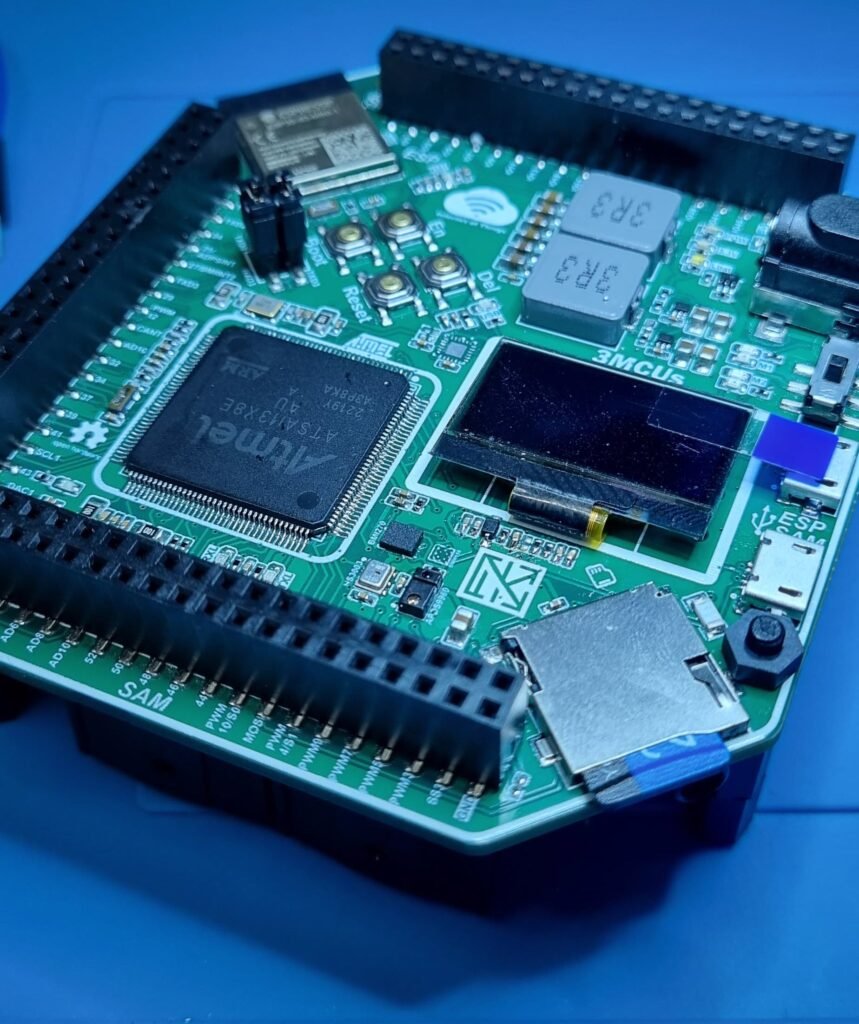
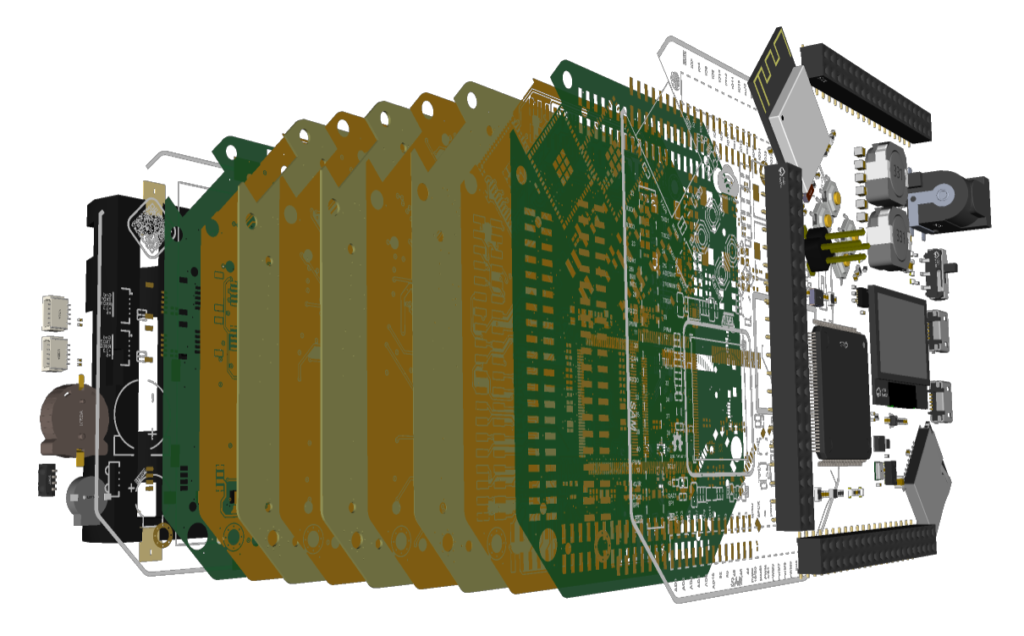
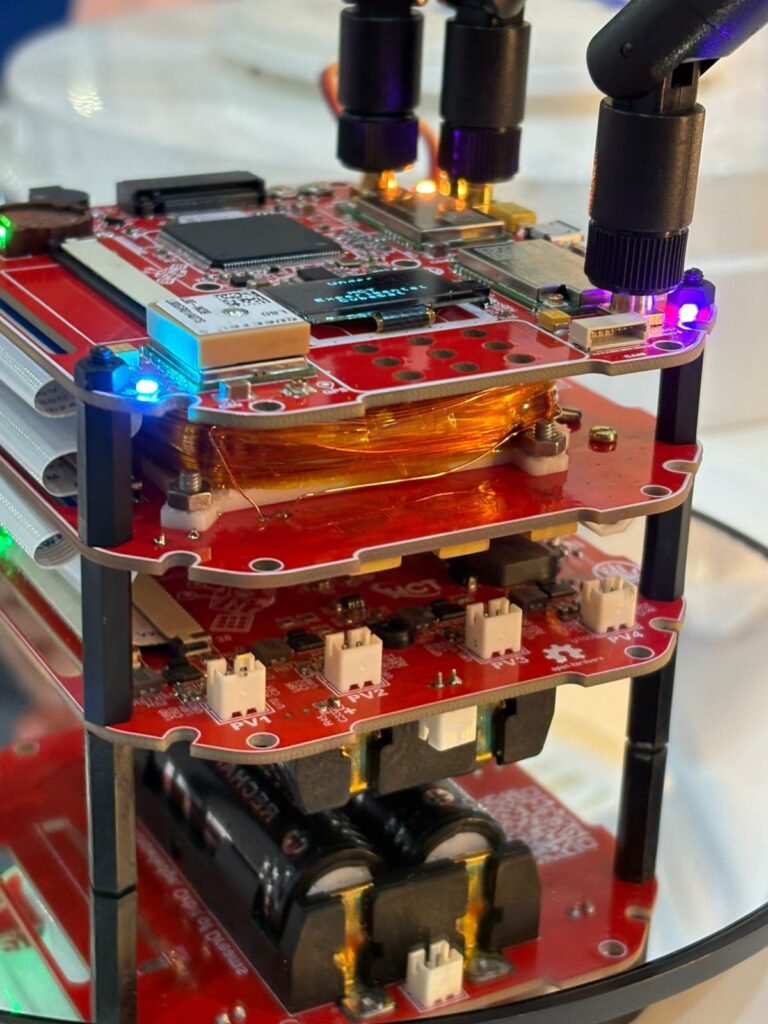
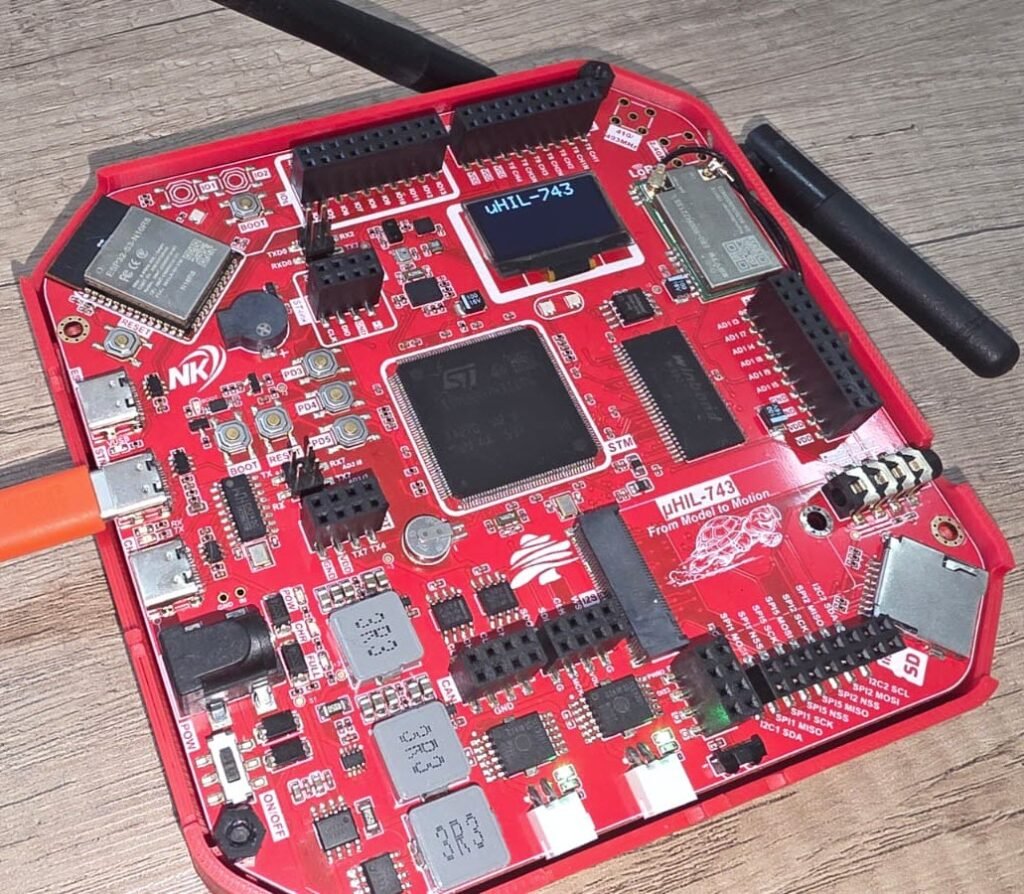
Engineered for advanced robotics, edge sensing, and distributed automation, this multipurpose control board integrates dual-processing power with an extensive array of peripherals. At its core, the architecture combines the heavy-duty numerical and real-time processing of the 32-bit ARM Cortex-M3 ATSAM3X8E (the MCU underpinning the Arduino Due) with the wireless, high-frequency connectivity of the Espressif ESP32-S3-MINI. Designed for demanding applications such as mobile robotics, environmental monitoring stations, and 1U subsystem prototyping, the board offers a comprehensive hardware solution on a compact multi-layer layout.
Technical Specifications & Architecture
Core Processing Unit
-
Primary MCU: ATSAM3X8E (32-bit ARM Cortex-M3 running at 84 MHz, 512KB Flash, 96KB SRAM)
-
Wireless Co-Processor / IoT MCU: ESP32-S3-MINI (Tensilica dual-core Xtensa 32-bit LX7, Wi-Fi 802.11 b/g/n, Bluetooth 5 / BLE)
-
Inter-Processor Communication: Dedicated hardware UART serial link facilitating high-speed data exchange and command execution between the ARM core and the ESP32-S3.
-
Programming Interface: Independent USB connectivity supporting direct, native programming for both microcontrollers via the Arduino IDE.
Power Management
-
Input Supply: Powered by a dual 3.7V LiPo cell configuration (nominal 7.4V architecture).
-
On-Board Regulation: Low-dropout regulation stages delivering clean, isolated 3.3V rails for digital logic, analog sensor subsystems, and RF communication modules.
Motor Control Subsystem
-
Drivers: Dual independent DRV8871DDA H-bridge motor drivers.
-
Capabilities: Drives two DC motors or one bipolar stepper motor with built-in current limiting, thermal shutdown, and PWM speed/direction control directly managed by the microcontroller architecture.
Sensor Suite
-
IMU & Motion:
-
MPU-9250 (9-axis MotionTracking: 3-axis gyroscope, 3-axis accelerometer, and 3-axis magnetometer)
-
BMI270 (Ultra-low power 6-axis IMU with intelligent inertial measurement features)
-
BMM150 (Low-power, low-noise 3axis digital geomagnetic sensor)
-
-
Environmental & Optical:
-
HS3003 (High-accuracy relative humidity and temperature sensor)
-
APDS-9960 (Digital proximity, ambient light, RGB, and gesture detection sensor)
-
-
Data Acquisition: On-board high-resolution Analog-to-Digital Conversion (ADC) and Digital-to-Analog Conversion (DAC) channels.
-
User Interface & Feedback:
-
Monochrome OLED display for real-time telemetry, status logging, and diagnostic readouts.
-
On-board Infrared (IR) sensor for remote command reception and proximity detection.
-
MicroSD card interface for local data logging, configuration file storage, and asset management.
-
Input / Output & Expansion
-
ATSAM3X8E I/O: 76 flexible digital/analog IO pins breaking out extensive timers, PWM channels, SPI, I2C, and UART interfaces.
-
ESP32-S3 I/O: 28 dedicated pins providing access to native USB, capacitive touch sensors, DMA-enabled channels, and advanced peripheral mapping.
Embedded Firmware & Development Ecosystem
The board is fully integrated into the standard Arduino IDE ecosystem, bypassing proprietary toolchains and allowing developers to leverage existing libraries for both architectures.
-
ATSAM3X8E Firmware: Handles deterministic control loops, motor driving routines, sensor polling at high sampling rates, and real-time data fusion.
-
ESP32-S3 Firmware: Manages wireless data streaming, remote telemetry over Wi-Fi/BLE, over-the-air (OTA) updates, and web-server or MQTT protocol implementation.
Target Applications
-
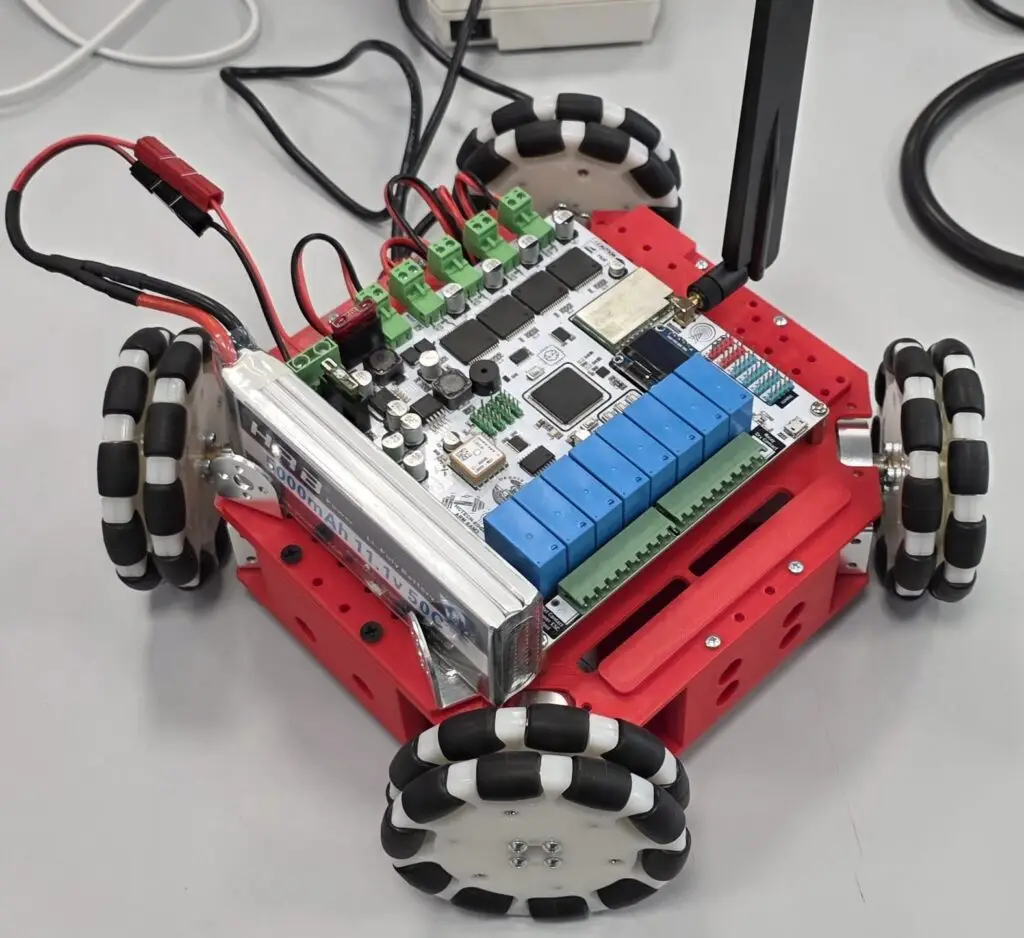
Advanced Autonomous Mobile Robots (AMRs): Utilizing the dual-core processing for simultaneous low-level motor kinematics and high-level navigation/telemetry.
-
IoT Sensor Hubs: Leveraging the ESP32-S3 Wi-Fi/BLE capabilities alongside industrial communication protocols and environmental sensors.
-
Educational & Research Prototyping: Providing students and engineers with a unified platform for control systems, signal processing, and hardware-in-the-loop (HIL) testing.



Reviews
There are no reviews yet.