

Description
μHIL-743 (STM32H743) PIL/HIL Embedded Platform: From Model to Motion
1. The Hero Pitch: Bridging the Virtual and the Physical
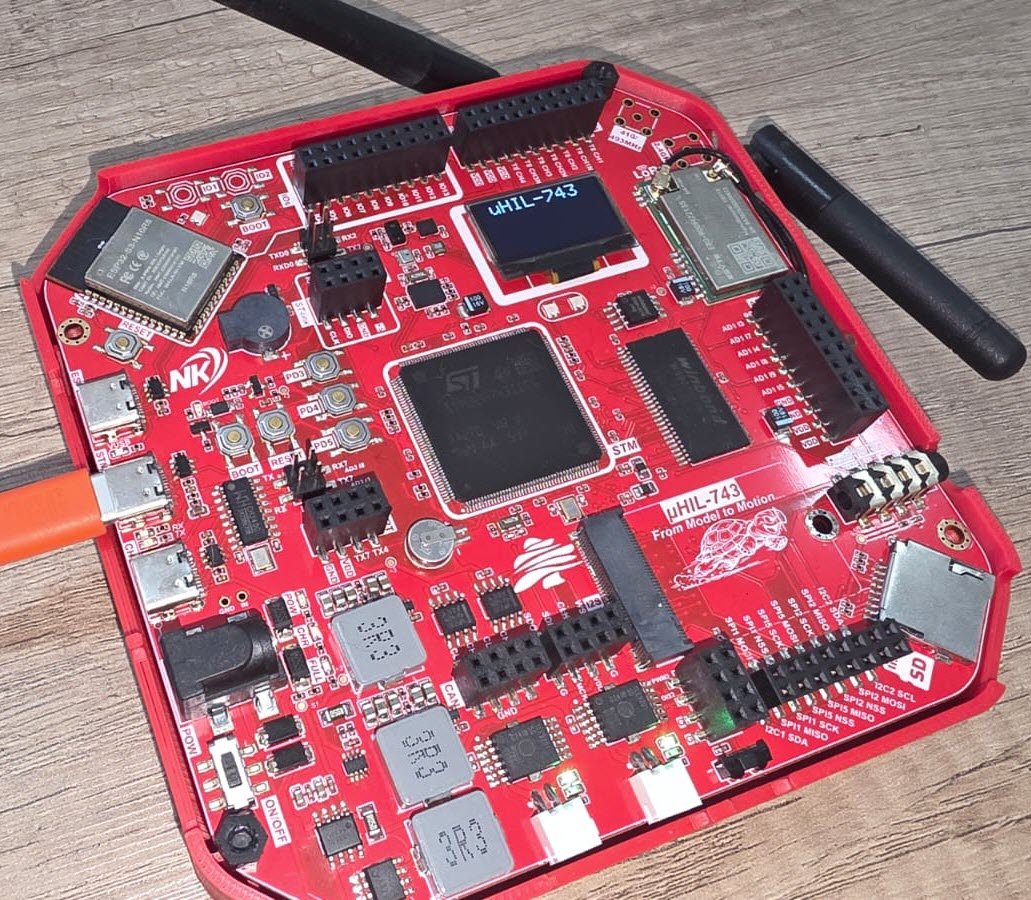
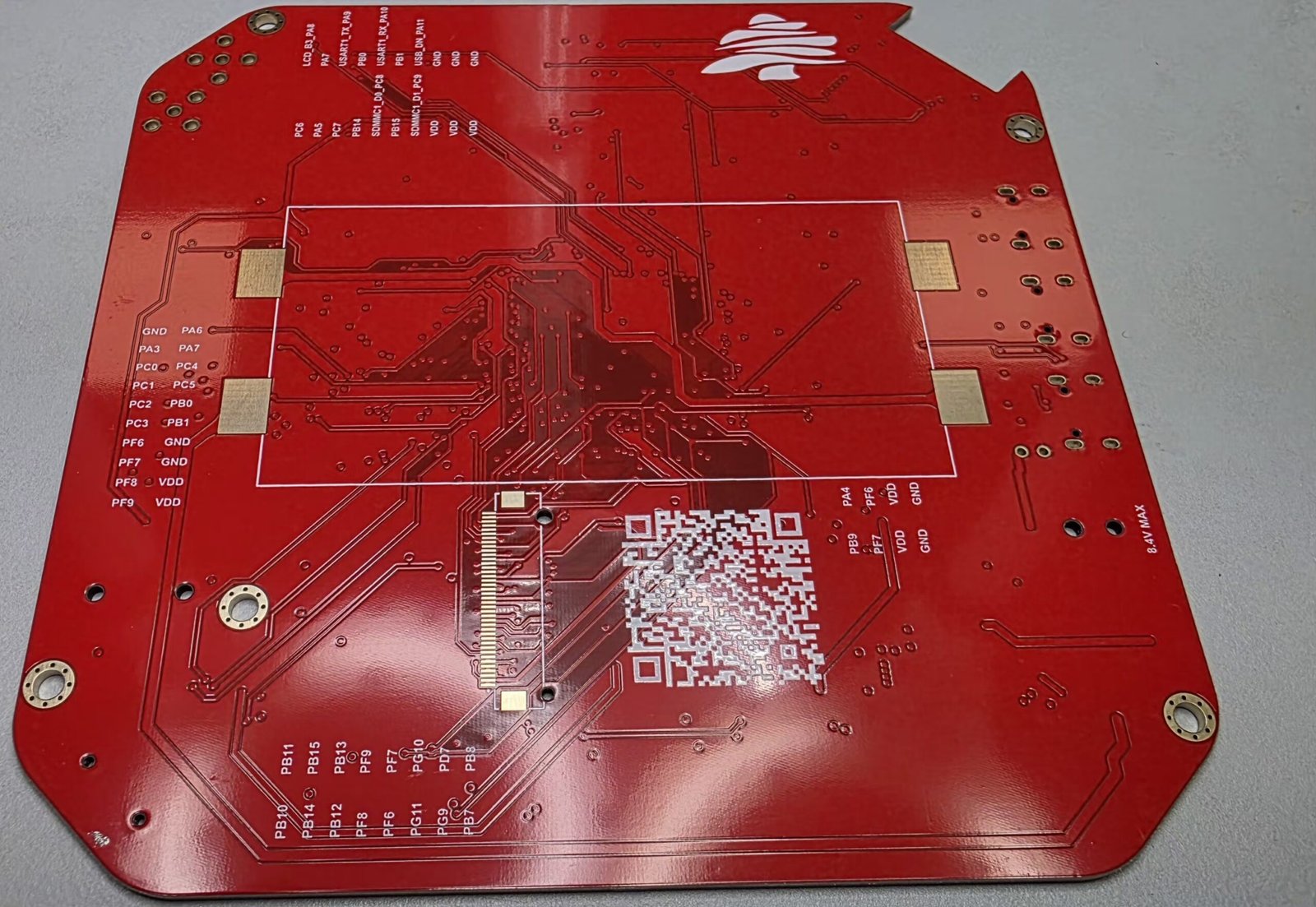
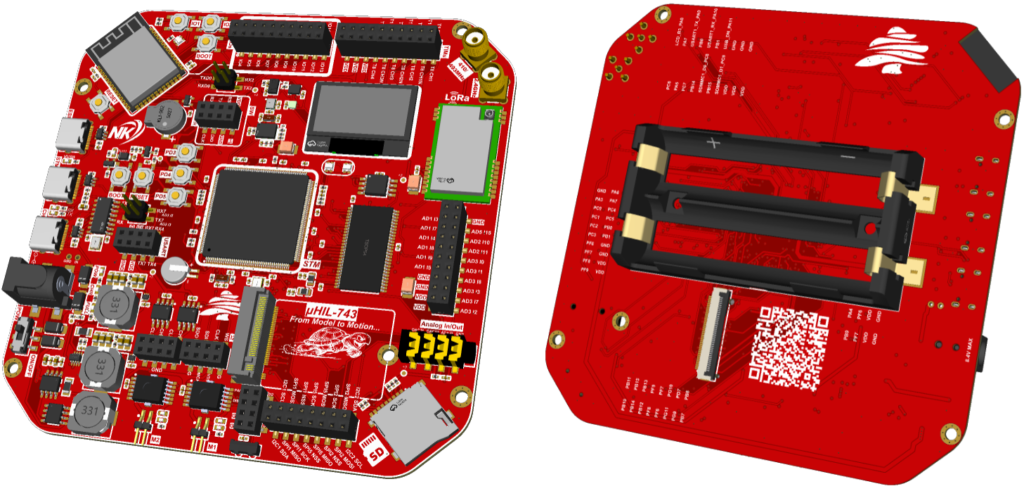
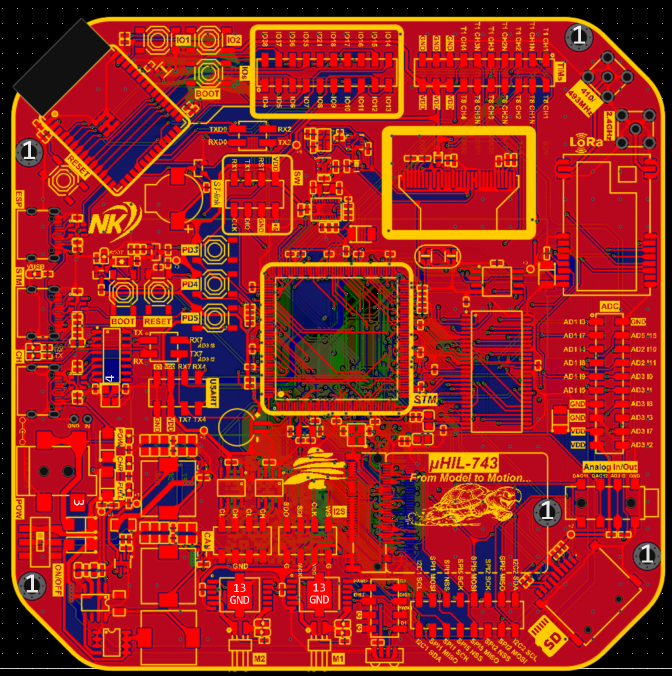
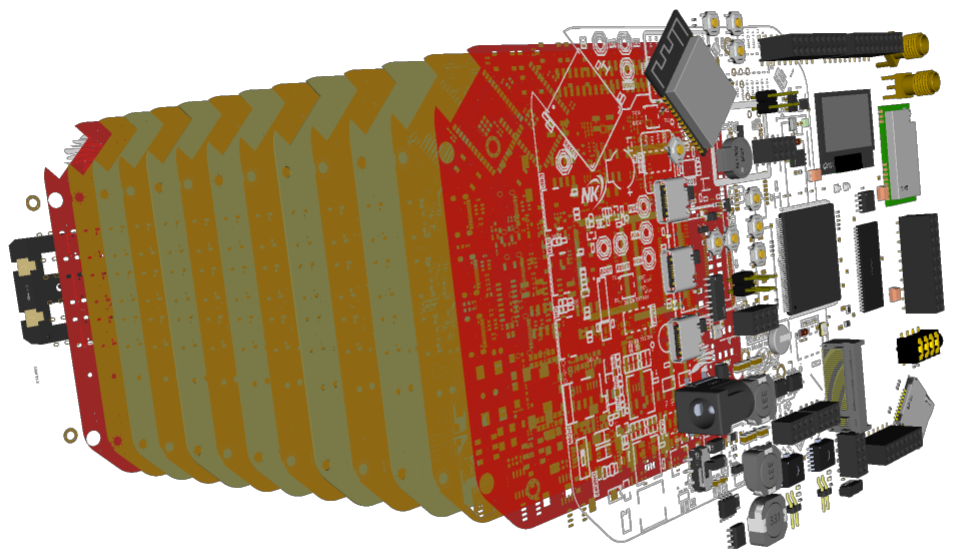
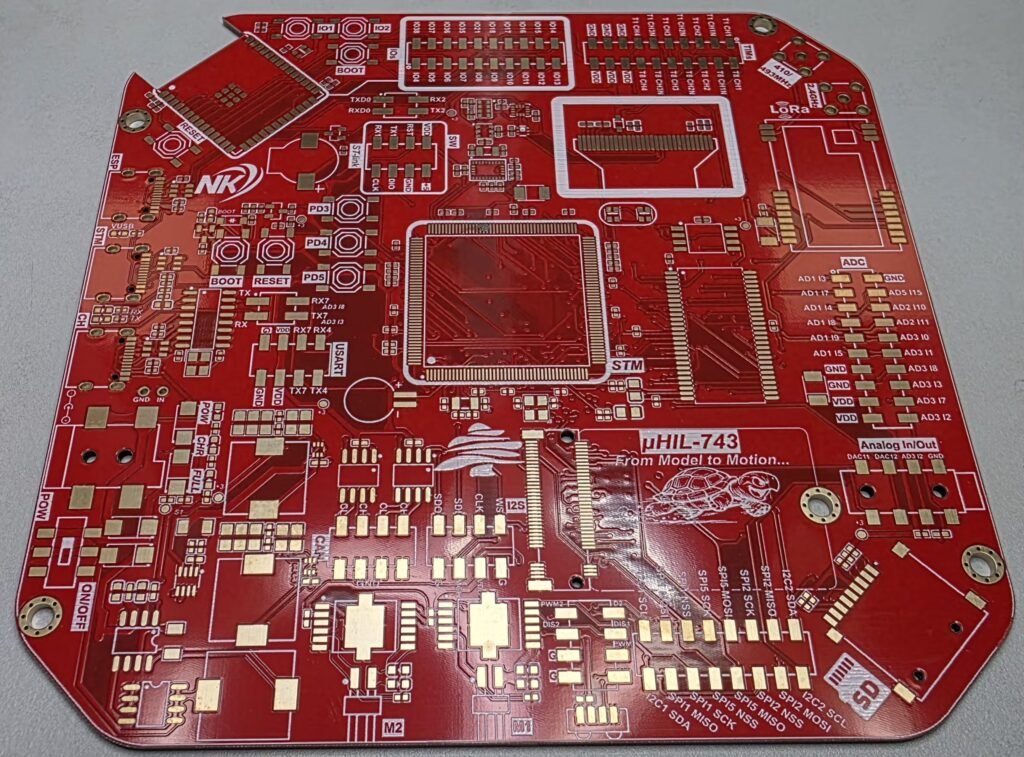
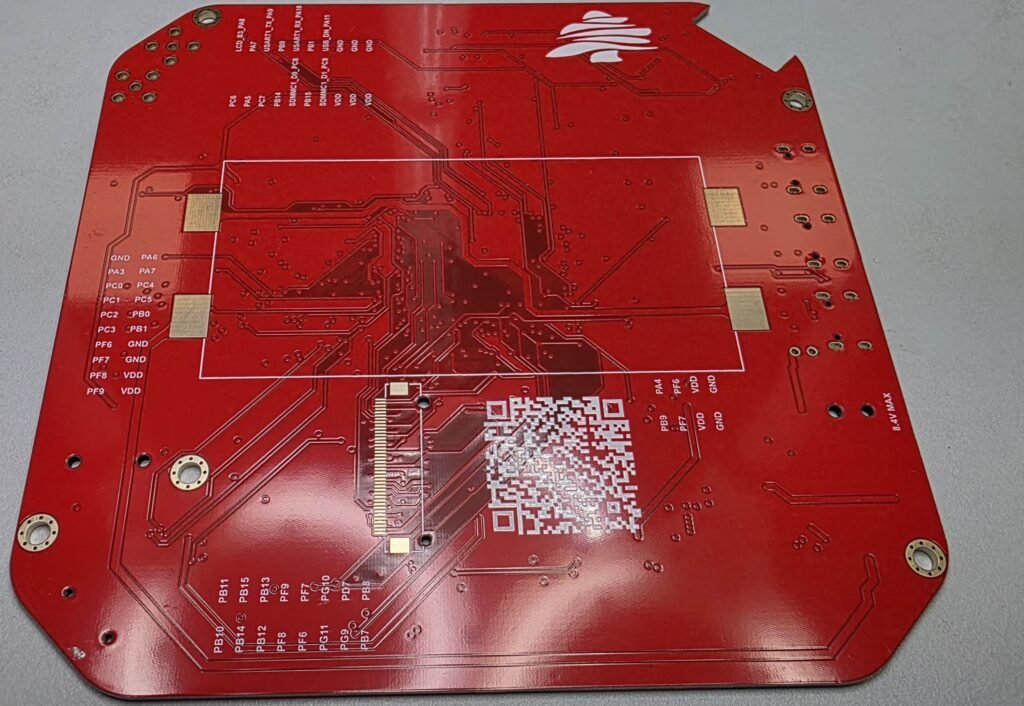
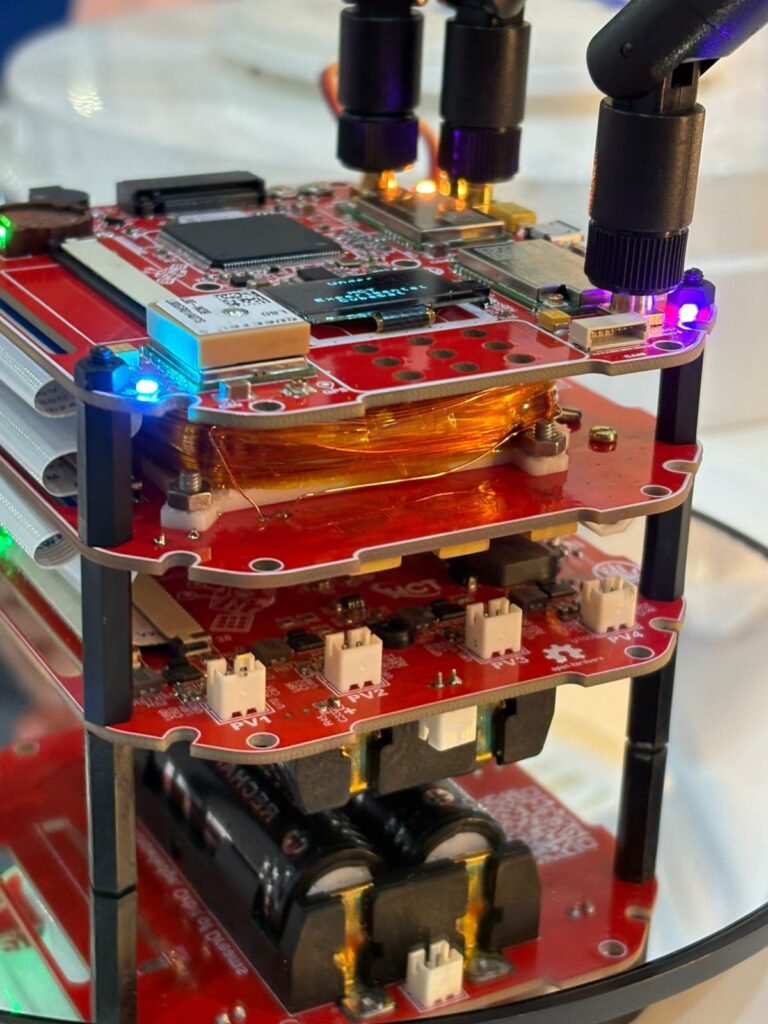
The μHIL-743 is the definitive hardware solution designed to bridge the high-fidelity world of MATLAB/Simulink modeling with the rigorous demands of real-time physical execution. Contained within a compact 13 cm x 13 cm footprint, this platform is engineered for researchers and engineers who require an uncompromising environment for Processor-in-the-Loop (PIL) and Hardware-in-the-Loop (HIL) simulation. Central to its reliability is a sophisticated 6-layer PCB design. This stackup is a strategic necessity, providing the controlled impedance and dedicated ground planes required to maintain signal integrity for the high-speed 133 MHz FMC parallel bus and the 480 MHz system clock, ensuring immunity from electromagnetic interference in dense control environments.
By adhering to a “Model to Motion” philosophy, the μHIL-743 facilitates rapid prototyping and TRL acceleration, transforming abstract mathematical control laws into deterministic physical motion. This robust physical foundation serves as the gateway to the platform’s exceptional internal processing capabilities.
2. The Core Computational Powerhouse: STM32H743IIT6
At the heart of the platform is the STM32H743IIT6, an ARM Cortex-M7 engine optimized for the most intensive real-time edge processing tasks. Running at a peak frequency of 480 MHz, this processor provides the deterministic execution window critical for HIL configurations where jitter-free control loops are non-negotiable.
- Analytical Throughput: The architecture delivers 1027 DMIPS and 2424 CoreMark, a performance tier that allows for the localized execution of high-order mathematical models that typically require a PC-grade processor.
- Math Acceleration: The integrated Double-Precision Floating-Point Unit (DP-FPU), conforming to IEEE 754, ensures the high-rate resolution of complex matrix transformations and chaotic equations without the rounding errors inherent in single-precision units. Hardware-level DSP instructions further enable single-cycle Multiply-Accumulate (MAC) operations for real-time signal filtering and localized AI inference.
- Eliminating CPU Starvation: To support this throughput, the system utilizes a 16KB I/D L1 cache and a 1MB internal SRAM hierarchy. The Tightly Coupled Memory (ITCM/DTCM) provides zero-wait-state access for critical Interrupt Service Routines (ISRs), while the AxiSRAM handles high-bandwidth data movement across the system’s interconnect matrix, preventing the core from stalling during heavy I/O tasks.
3. Multi-Tiered Memory Architecture: Eliminating Data Bottlenecks
Real-time simulation requires massive memory overhead to handle the expansive lookup tables and code arrays generated by the Simulink Embedded Coder. The μHIL-743 provides a scalable memory hierarchy that eliminates traditional access latencies.
- High-Bandwidth Expansion: The platform features a 16-bit, 133 MHz Flexible Memory Controller (FMC) bus linked to 32 MB of external SDRAM (Winbond W9825G6KH-6I). This parallel interface achieves a peak bandwidth exceeding 266 MB/s, which is essential for managing the high-frequency state-space variables required in HIL filtering.
- Execution-in-Place (XIP): For firmware offloading, the system integrates 8 MB of QSPI Serial NOR Flash (Winbond W25Q64JVSIQ). Operating in Quad-I/O Memory-Mapped XIP mode, the Cortex-M7 can execute instructions directly from external flash as if it were internal silicon, significantly expanding the firmware ceiling.
- Autonomous Telemetry: A microSD slot via the SDMMC interface supports bulk data logging. By leveraging autonomous DMA offloading, the system can stream high-rate telemetry frames to storage without consuming CPU clock cycles, preserving the processor for primary control tasks.
4. The Unified Communication Suite: Wired & Wireless Connectivity
The μHIL-743 is designed as a central node for Digital Twin and Industrial IoT research, featuring a multi-protocol suite that ensures connectivity across any network topology.
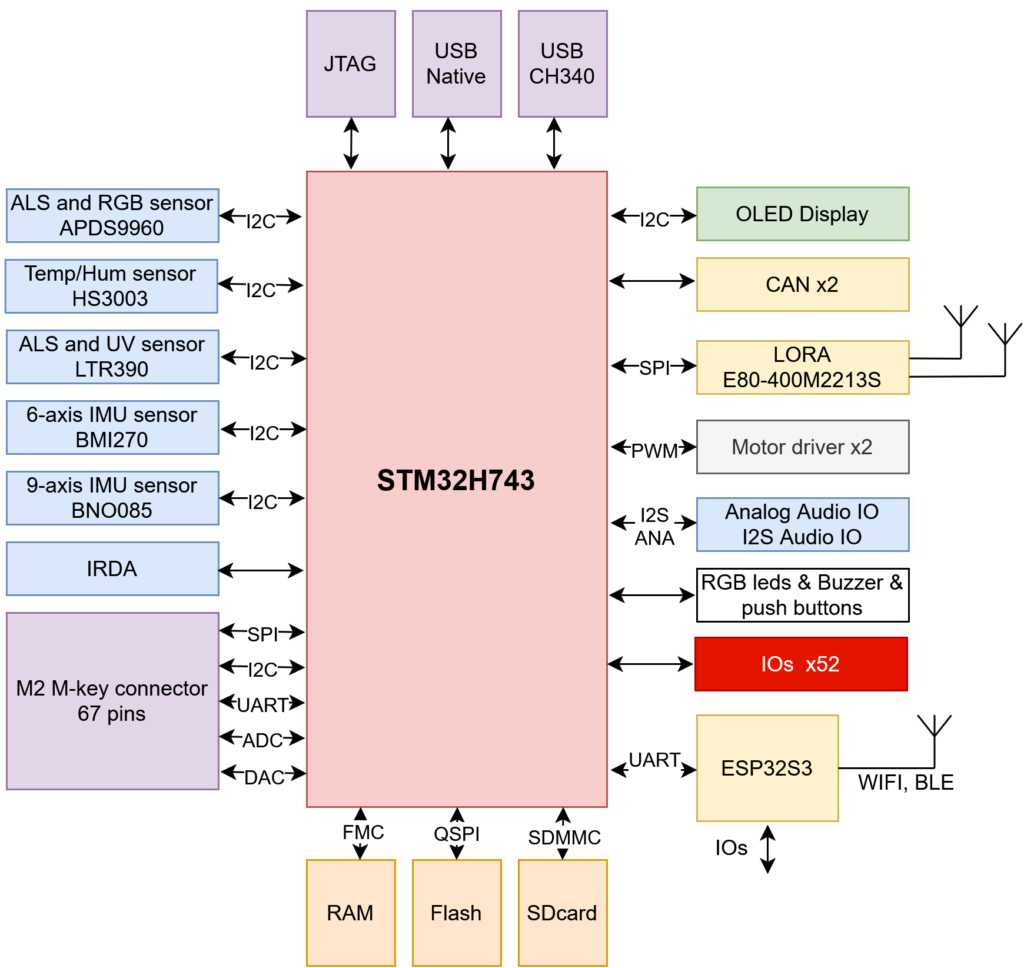
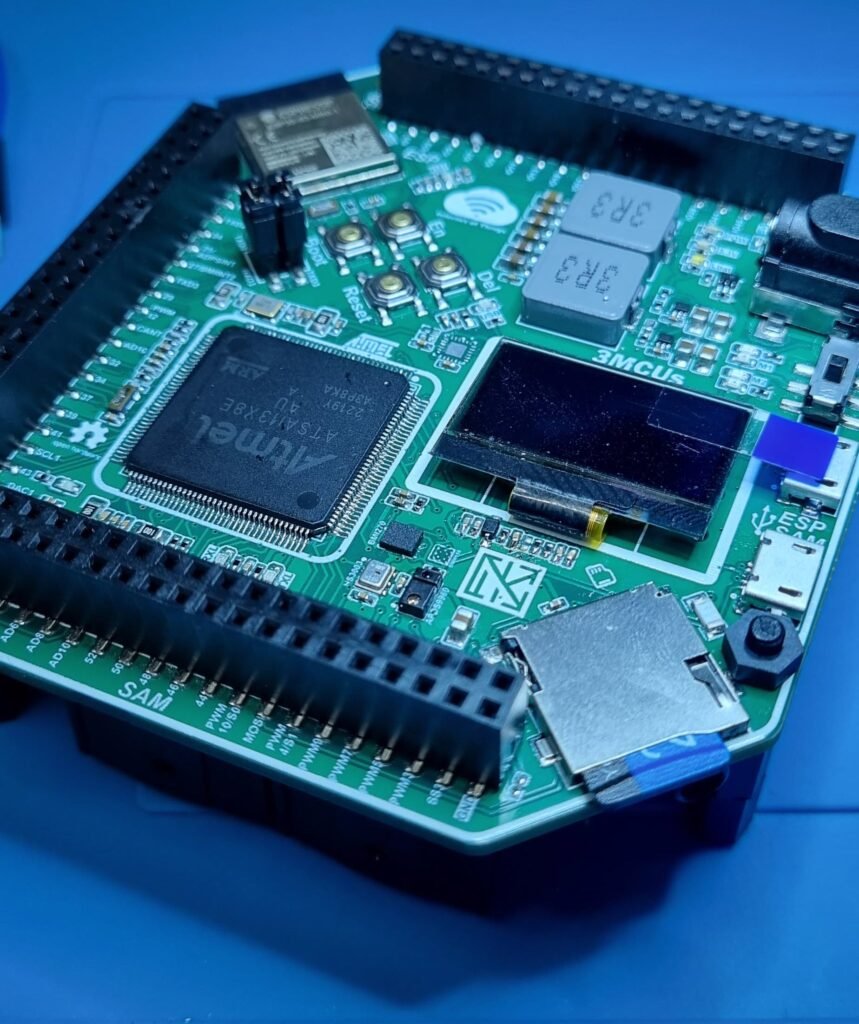
- Wireless Ecosystem: The ESP32-S3 coprocessor manages Wi-Fi and BLE stacks, isolating wireless overhead from the primary STM32H743. For long-range telemetry, the E80-400M2213S LoRa transceiver provides robust links at 433MHz/2.4GHz. This module uses a hybrid 4-wire SPI interface with a dedicated hardware Busy signal (LCD_B0_PG14), allowing the H743 to manage the LoRa state machine with maximum efficiency.
- Industrial Wired Comms: Dual-channel high-speed CAN (SN65HVD230QD) transceivers provide differential signaling for high-EMC automotive and industrial networking.
- Triple USB-C Debugging: The system incorporates three USB-C paths (Native STM, Native ESP, and CH340 Bridge). These are professional-grade Type-C connectors featuring 5.1 kΩ pull-down resistors on CC lines for proper host power negotiation and are fully protected by USBLC6-2SC6Y ESD diode arrays.
5. Actuation, Sensor Fusion, and Industrial Expansion
Interaction with the physical world is managed through a specialized suite of sensors and high-current drivers.
- Sensor Fusion & Audio: The platform features the BNO085 9-axis IMU running Hillcrest Labs’ SH-2 firmware. By performing complex sensor fusion on-chip, it provides stable quaternions and acceleration vectors while drastically reducing the STM32’s interrupt load. This is complemented by the BMI270 (6-axis), HS3003 (Temp/Hum), and LTR-390UV-01 (UV). For advanced telemetry, the system includes a PJ-313E8-Y-SMT Analog Audio IO and a TSOP95240TR Infrared Receiver for optical command telemetry.
- Industrial Actuation: To drive physical hardware, dual 6A H-bridges (TLE9201SGAUMA1) provide bidirectional DC motor control. These drivers include integrated short-circuit and overtemperature protections, ensuring safety during model validation.
- Advanced Expansion: The 67-pin M.2 M-Key exposes SPI, I2C, UART, ADC, and DAC for AI accelerators. Additionally, the 40-pin FPC connector carries a full 24-bit RGB parallel bus, supporting high-resolution 7-inch AT070TN83 displays for sophisticated HMI development.
6. Intelligent Power Management & Battery Analytics
To support both laboratory benches and autonomous field deployments, the platform implements a stable, dual-rail power infrastructure.
- Battery & Charging: The system is powered by a dual series Li-ion configuration, managed by the CN3302 charging controller. This allows for simultaneous charging and operation from DC or USB sources with diode-based isolation to prevent reverse current.
- Energy Analytics: The INA219 energy monitor provides real-time power analytics, while an analog voltage-sensing circuit enables state-of-charge estimation, vital for profiling the efficiency of control algorithms during long experiments.
- Dual-Rail Regulation: High-efficiency buck converters generate two distinct rails: a 3.3V rail for the core logic/sensors and a 5V rail dedicated to external peripherals and the expansion interfaces.
7. μHIL-743 Technical Specifications Sheet
| Feature | Specification / Component | Value / Benefit |
| Processor | STM32H743IIT6 (Cortex-M7) | 480 MHz / 1027 DMIPS / 2424 CoreMark |
| Math Acceleration | Hardware DP-FPU (IEEE 754) | 64-bit precision / zero-latency DSP |
| L1 Cache | 16 KB I-Cache / 16 KB D-Cache | Eliminates CPU starvation/memory stalls |
| Internal RAM | 1 MB SRAM (TCM, AxiSRAM) | Zero-wait-state ISR & high-speed AXI bus |
| External SDRAM | 32 MB Winbond W9825G6KH-6I | 133 MHz FMC / >266 MB/s Bandwidth |
| External Flash | 8 MB QSPI Flash (W25Q64JVSIQ) | Memory-Mapped XIP Mode for offloading |
| Wireless | ESP32-S3 & E80-400M2213S LoRa | Wi-Fi, BLE, and 433MHz/2.4GHz Telemetry |
| Wired Comms | Dual CAN, Triple USB-C | Industrial Networking / 5.1kΩ CC detection |
| Motor Drivers | Dual TLE9201SGAUMA1 H-Bridges | 6A Bidirectional / Integrated Protections |
| Sensor Suite | BNO085 (SH-2), BMI270, HS3003 | 9-axis fusion, Acceleration, Environment |
| Audio / IR | PJ-313E8-Y-SMT & TSOP95240TR | Analog Telemetry & Optical Command |
| Expansion | 67-pin M.2 & 40-pin RGB FPC | AI Accelerators & 24-bit Parallel HMI |
| Power | CN3302 Charger / INA219 Monitor | Dual-rail 3.3V/5V / Energy Analytics |
8. Strategic Applications and Research Frontiers
The μHIL-743 serves as a catalyst for high-stakes embedded research, providing the computational ceiling and modularity required for the next generation of autonomous systems. By combining the power of the Cortex-M7 with the extensibility of the M.2 interface and 24-bit RGB display support, the platform is future-proofed for AI-driven control and complex robotics applications.
Key Use Cases:
- PIL/HIL Simulation: Direct validation of high-order Simulink models against physical constraints.
- Digital Twin Development: Real-time state-space representation of industrial and aerospace assets.
- Aerospace Control Validation: Testing flight control laws with on-chip 9-axis fusion and IR telemetry.
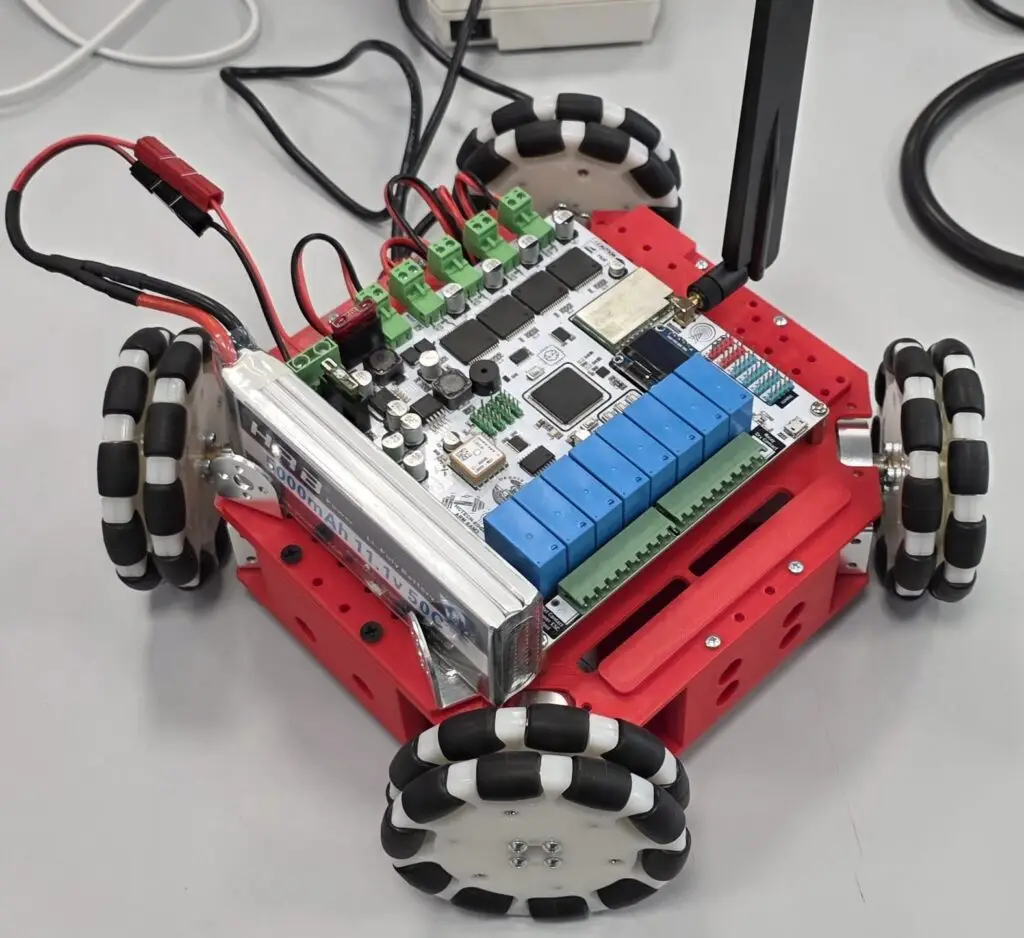
- Autonomous Robotics: Localized machine learning and sensor fusion for navigation and path planning.
No physical product will be shipped. Your purchase includes access to the digital files only.
Reviews
There are no reviews yet.